A first purchase proves a customer was willing to try you. A thoughtful corporate gift can give them a reason to remember you. Many businesses spend heavily to win a new buyer, then disappear once the invoice is paid. That silence leaves the relationship open for competitors. In this article, we cover how Australian companies can turn one-time buyers into repeat customers by using corporate gifts, timing follow-ups correctly, and providing account management that feels personal rather than transactional.
Why do one-time buyers fail to return?
Most one-time buyers do not disappear because the first order failed. They disappear because the relationship was never developed after the sale. A customer may be satisfied and still forget who they ordered from.
| Problem |
What the Buyer Experiences |
Relationship-Focused Fix |
| No post-purchase thank-you |
“They only cared until I paid” |
Send a personal thank-you with a small branded gift |
| No reason to remember the supplier |
“I forgot who supplied it” |
Use a practical desk or daily-use item that keeps the brand visible |
| Generic follow-up |
“This could have been sent to anyone” |
Reference their order, event, industry, or use case |
| No account relationship |
“I dealt with a company, not a person” |
Assign a named contact and include their details in follow-up |
| No useful next step |
“There is no reason to return” |
Suggest a related product or reorder timeline |
| Poor timing |
“They contacted me only when they wanted another sale” |
Check in after delivery, after use, and before the next likely need |
How corporate gifts nurture the relationship after a first order?
Corporate gifts are a great way to build a relationship with a client. But if it’s too generic and doesn’t really consider what they do or who they are, it wouldn’t be as effective. Charles Liu, our founder, always says that a gift should do these three things:
- It thanks the buyer for choosing your business.
- It helps them use or remember the original purchase.
- It makes the next purchase easier.
For example, a client who ordered event products might receive a thank-you card with a branded notebook for their next planning meeting. A customer who ordered staff apparel might receive a small sample card showing matching winter items. A procurement contact who managed a complex order might receive a desk calendar with reorder reminders marked for key buying periods.

| Gift Type |
Best Timing |
How It Encourages Repeat Business |
| Handwritten thank-you cards |
Immediately after delivery |
Adds warmth and shows the order was valued |
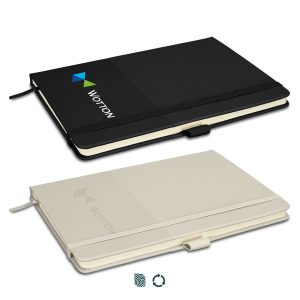
| Custom printed notebooks |
After a planning-heavy project |
Keeps the supplier visible during future meetings |
| Branded drink bottles or tumblers |
After a staff or event order |
Gives the buyer a practical daily-use reminder |
| Desk calendars |
Before a new planning year |
Encourages early ordering and campaign planning |
| Product sample pack |
After a successful first order |
Introduces the next logical purchase without pressure |
| Premium corporate gift |
After a high-value or complex order |
Recognises trust and strengthens the account relationship |
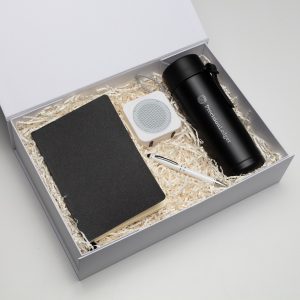
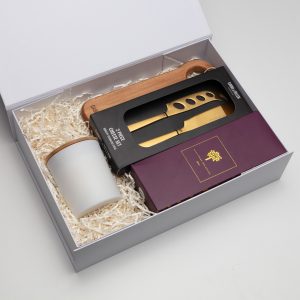
The item does not have to be expensive. It needs to make sense. For example, if you’re a car dealership company, you may want to consider keyrings and package them in black boxes. Or if you’re a finance consulting firm, then a Moleskine notebook or a planner works best. As for us, we always give clients a bit of everything: hoodies, insulated drink bottles, and a small thank-you card.
What should happen after the first purchase?
The post-purchase period is where a transaction becomes a relationship. Do not wait months before making contact again. Use this relationship-building follow-up plan:
| Follow-Up Timing |
Recommended Action |
Gift or Merchandise Opportunity |
| Delivery day |
Confirm the order arrived and ask if everything looks right |
No gift needed; focus on reassurance |
| 2–3 days later |
Send a personal thank-you message |
Include a handwritten card for higher-value orders |
| 2 weeks later |
Ask how the product, service, or order was used |
Offer a related sample or planning guide |
| 1–2 months later |
Suggest a useful next step based on their original need |
Send a small branded desk item or product comparison sheet |
| Before expected reorder |
Remind them of previous order details |
Include saved artwork, quantities, and updated options |
The best follow-up feels helpful. It should not sound like “buy again now.” It should sound like, “We remembered what you needed last time and thought this might help with the next one.”
Which corporate gifts suit different buyer types?
Every company would need different gifts because you are targeting different audiences.
| Buyer Type |
Likely Repeat Need |
Suitable Corporate Gift |
Why It Works |
| Event organiser |
Next conference, expo, or community event |
Notebook, tote bag, or event planning sample pack |
Supports planning and keeps the supplier visible |
| HR team |
New starters, staff milestones, internal campaigns |
Branded tumbler, welcome-kit sample, or desk item |
Links the gift to employee experience |
| Marketing team |
Campaign launches and lead generation |
Product sample pack or creative merchandise guide |
Helps them visualise future campaigns |
| Procurement manager |
Budget cycle and supplier comparison |
Desk calendar or product comparison sheet |
Supports organised forward planning |
| Charity or not-for-profit |
Fundraising season or donor recognition |
Thank-you cards, badges, or practical supporter item |
Connects to appreciation and community value |
| Education buyer |
Orientation, open day, or student events |
Tote bag, pen, notebook, or bottle sample |
Matches common student and event needs |
How to use gifts without making them feel like a bribe?
The difference between a corporate gift and a sales gimmick is intent. A gift should recognise the relationship, not pressure the buyer. That is a useful model for repeat business:
- Use a call to understand how the first purchase performed.
- Use email to confirm reorder details, artwork, delivery requirements, or sample options.
- Use a corporate gift to thank the buyer or support their next planning stage.
- Use the next follow-up to make reordering easier, not harder.
A gift becomes more valuable when paired with a memory. For example: “You mentioned your team starts planning the annual conference in August, so I have included a small planning notebook and a few sample ideas that suit delegate packs.”
What branded touchpoints encourage repeat buying?
Branded touchpoints work best when they help the customer remember you at the next buying moment. They should be practical enough to keep and relevant enough to connect back to the first purchase.
| Touchpoint |
When to Use It |
Why It Helps |
| Thank-you card |
After delivery |
Makes the order feel personal |
| Reorder card |
Inside the delivery carton |
Keeps previous order details handy |
| Custom printed notebook |
After a planning-based order |
Keeps your brand visible in future meetings |
| Product sample insert |
With the first delivery |
Introduces related items without a hard sell |
| Desk calendar |
Before a new planning year |
Encourages forward planning and reorder timing |
| Branded tumbler or mug |
After a strong first order |
Gives daily-use visibility in the workplace |
| Small appreciation gift |
After a major or complex order |
Builds goodwill and recognises trust |
How do you measure whether it improved repeat business?
Corporate gifting should feel human, but it still needs to be measured. Track whether gift-led follow-up creates stronger relationships over time. Useful measures include:
- First-to-second order conversion rate.
- Average time between first and second purchase.
- Reorder rate after thank-you gifts.
- Response rate to post-purchase follow-up.
- Number of customers using saved artwork or previous order details.
- Repeat purchase rate by industry.
- Customer feedback after receiving gifts or samples.
- Referral enquiries from first-time buyers.
For higher-value accounts, track notes in your CRM. Record what was sent, when it was sent, and what the buyer cared about. That prevents the next touchpoint from feeling generic.
Ready To Buy?

About the Author
Owner
Charles Liu is the Founder and a recognised authority in the promotional products and uniforms industry in Australia. With over 20 years of experience, he has guided Cubic Promote to work with over 15,000 Australian organisations. His specialty is helping Aussie companies select the right products that stay within their budget. He also specialises in sourcing and assisting brands and government agencies in selecting corporate gifts for VIPs and high-profile clients. A regular contributor to industry blogs, Charles shares his expert insights on using branded merchandise to achieve business goals. Charles’s deep understanding of industry trends and strong supplier relationships make him a trusted figure in the sector, continually influencing the development of both products and uniforms that deliver tangible, measurable results.
Connect with Charles on LinkedIn